Shore Flies, Muddy Dogs, and an Evening at Antelope Island
One of the reasons I keep going back to the Great Salt Lake is that it has a habit of ignoring my plans.
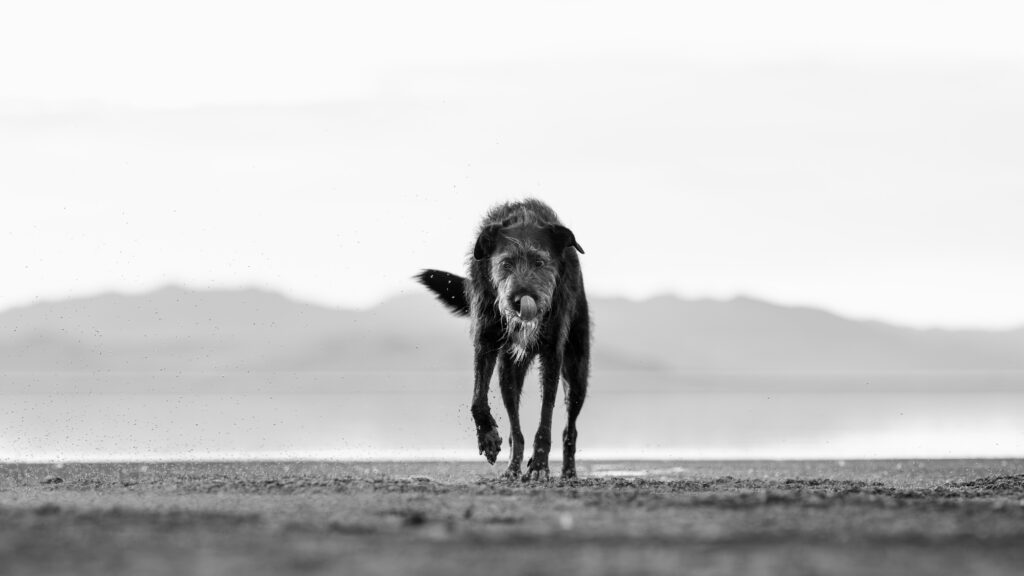
This trip started with black-and-white photography. A few days before the Fourth, two friends and I headed out to Antelope Island State Park with Tucker and Darwin, thinking we’d spend the evening looking for shapes, contrast, and long shadows.
For early July, the weather felt almost suspiciously reasonable. The heat stayed manageable, and the mosquitoes, which generally believe every warm-blooded creature exists entirely for their convenience, were almost completely absent. Nature, however, rarely misses an opportunity to surprise you.
The ground was moving.
Not in any dramatic geological sense. Every stretch of damp shoreline was covered with tiny shore flies. Every step, every splash through a puddle, every little breeze sent them rolling across the mud in rippling waves. At first glance it looked like one of those Indiana Jones scenes where somebody has made a catastrophic decision and is about to disappear beneath a carpet of crawling things.
During the summer, shore flies can appear in astonishing numbers feeding on algae along the shoreline before becoming lunch for the millions of migratory birds that depend on the Great Salt Lake. Gulls, stilts, avocets, phalaropes, grebes. What looked like something from a horror movie turned out to be one small piece of an ecosystem that’s been quietly doing its job for thousands of years.
Our running commentary for the next several minutes was remarkably sophisticated.
“Creepy.”
“…but cool.”
As it turns out, the flies were completely harmless to both people and dogs, which made it much easier to appreciate the spectacle.
The Great Salt Lake is full of wonderfully strange things once you stop assuming they’re trying to kill you. (Don’t make the same assumption about the bison. They are big on personal space. They are actually big on everything! But really, don’t pet the “furry cows.”)
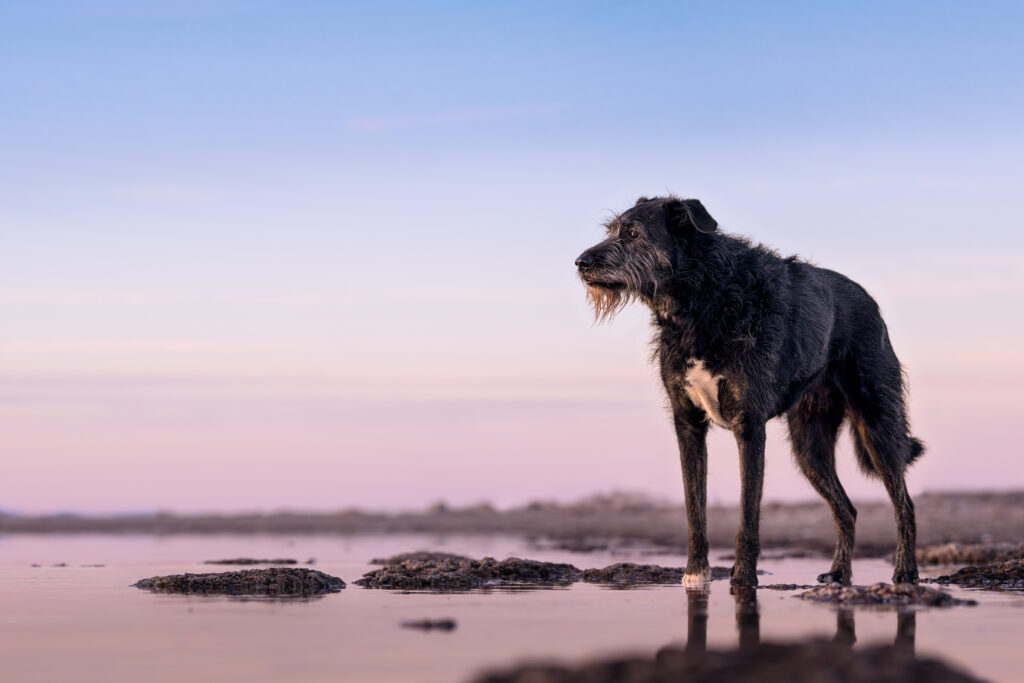
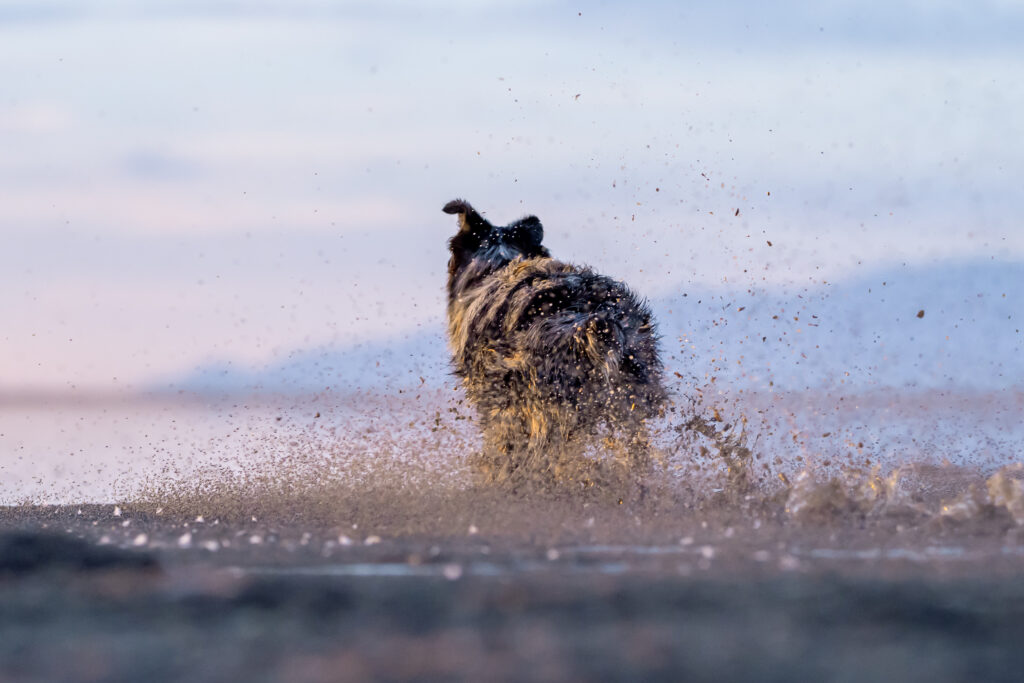
Once we’d gotten over the initial surprise, Tucker and Darwin did exactly what dogs should do. They charged through the shallows, covered themselves in mud, and repeatedly exploded through clouds of flies that lifted around them before settling back onto the shoreline. Neither dog spared the insects much thought. There was water to splash in, mud to wear proudly, and new smells arriving with every few feet of shoreline.
Somewhere along the way, I forgot all about black-and-white photography. I’d headed out looking for shapes, contrast, and dramatic skies, and I even came home with a few black-and-white frames that I still like. But the more I looked through the photos, the more obvious it became that this wasn’t a black-and-white evening. The warm light on wet fur, the pale blue Stansburys across the lake, the silver water, and even those improbable little shore flies all belonged together. Take away the color and you still have a good photograph. Leave it in, and you have the memory of standing on the edge of the Great Salt Lake in July.
That’s one of the reasons I keep going back to Antelope Island. You can make plans, scout locations, and convince yourself you know what you’re looking for, but the island has never shown much interest in cooperating. Sometimes it’s bison deciding they’ve had enough of your presence. Sometimes it’s weather that ignores the forecast. This time it was a shoreline that seemed to move under our feet and two dogs who were far too busy enjoying themselves to care what kind of photographs I thought I was making.
Tucker and Darwin eventually made a stop at the self-serve dog wash, where several pounds of Great Salt Lake mud returned to the drainage system. The shore flies settled back onto the algae, the birds kept patrolling the shoreline, and the evening carried on exactly as if we’d never been there.
The Great Salt Lake keeps being gloriously, unapologetically strange.
And I’ll definitely be coming back.
This probably won’t be my last post about the wonderfully strange corners of the Great Salt Lake. There’s still the microbialites, the brine shrimp, and the bison… although I’d recommend admiring the last group from a respectful distance.